
Marquette’s Ray “Buzz” Buivid: A better prospect than Baugh?
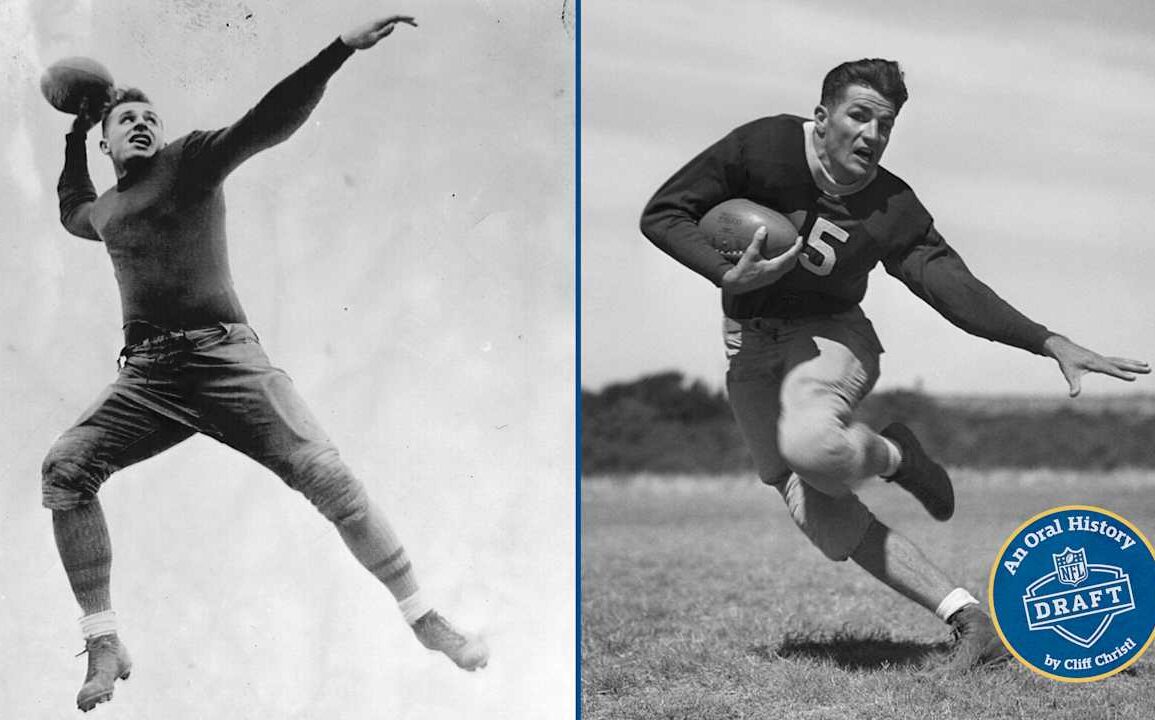
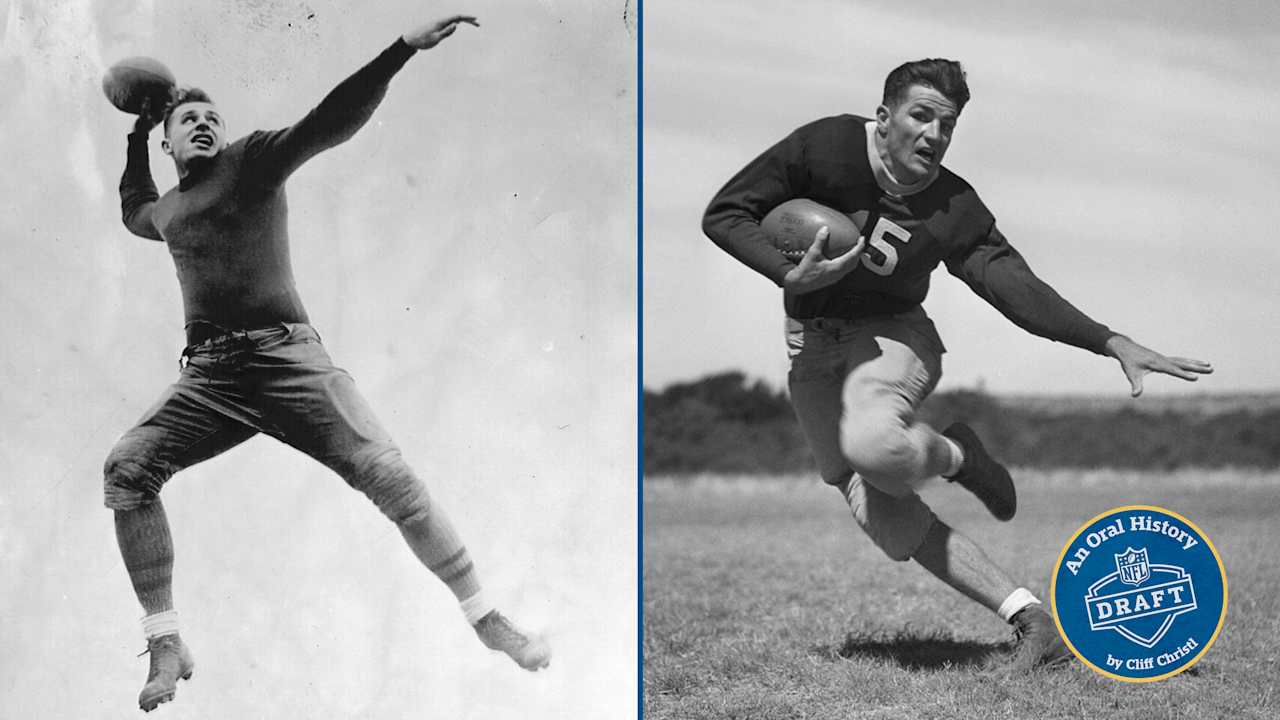
Although Baugh’s pro football career lasted 16 seasons, 14 more than Ray Buivid’s, it was Buivid, a triple-threat back at Marquette, who was drafted first. Buivid, who grew up in Port Washington, Wis., was selected by the Chicago Cardinals third overall, three spots before Baugh. Thereupon, the Cardinals traded Buivid’s rights before the day was over to the Bears for second-year tailback George Grosvenor, whose rights were still held by the Bears, although he had played in nine games with the Cardinals during the 1936 season.
At Marquette, Buivid was listed as the left halfback in what coach Frank Murray referred to as an offense with no adherence to a particular system. His attack included wide-open, shoot-the-works plays set up by single- and double-flanker sets, as well as plays from single-wing, Notre Dame Box and short-punt formations.
On one hand, Buivid was considered a better runner than Baugh. On the other hand, Buivid used more of a windup than Baugh as a passer and also tended to throw more fastballs, even on quick flips, than Baugh.
Ten days before the draft, Buivid (6-1, 190) had finished third and Baugh (6-2, 185) fourth in the Heisman Trophy voting. A week before the draft, the Associated Press All-America team was announced, and the two halfbacks were Buivid and another triple-threat back, Clarence “Ace” Parker (5-11, 175) of Duke. Baugh made second team.
At around the same time, when NFL coaches were asked to choose an All-America team by the North American Newspaper Alliance, they chose Baugh as their quarterback and Buivid as a halfback. Despite that, their consensus No. 1 back and the eventual No. 1 choice in the draft was Sam Francis.
A pile-driving fullback at Nebraska, Francis (6-0, 207) also drew praise for his booming left-footed punts and long left-handed passes. George Halas of the Bears rated Baugh, Buivid and Francis as the top backs. Boston Redskins coach Ray Flaherty split his vote for best back between Francis and Buivid.
University of Detroit coach Gus Dorais, a native of Chippewa Falls, Wis., and college football’s first famous passer when he played at Notre Dame with Knute Rockne, on preparing to play Buivid when he was a sophomore (Detroit Free Press, Nov. 31, 1934): “Buivid, Buivid, Buivid. It seems they have a player named Buivid. That’s all I can see in these (scouting) reports.”
Jack Ryan, former football coach at both Marquette and Wisconsin after watching Buivid lead the then Golden Avalanche to a 12-6 victory over the Badgers (Milwaukee Sentinel, Oct. 4, 1936): “Buivid is my all-American left halfback on what I saw today.”
Alan Gould, author of the story on the AP All-America team (Dec. 5, 1936): “Buzz Buivid, an iron-man who missed only 16 minutes of eight games set the pace for Marquette all season. Buivid belied his reputation as a passing specialist by doing most of the blocking, much of the secondary tackling and a good share of the ball-carrying for the Golden Avalanche.”
As it turned out, when Dorais coached the College All-Stars with both Baugh and Buivid on his roster, it was Baugh who clearly made a more favorable impression on him. Confirmation of that came when Buivid never got off the bench against the Packers.
Soon after, Buivid also made the mistake of signing with the New York Yankees of the second American Football League, then its second and final season. He played two games with them, claimed he was supposed to be paid $150 per game and received only $20, and jumped to the Bears.
With the Bears seeking to dethrone the NFL champion Packers, Buivid hardly played until the final regular-season game when he threw five touchdown passes in a 42-28 victory over the Cardinals. After Buivid saw limited action again in 1938, he went into the insurance business.