


Stability: Key to the Cowboys’ rise from expansion team to NFL power
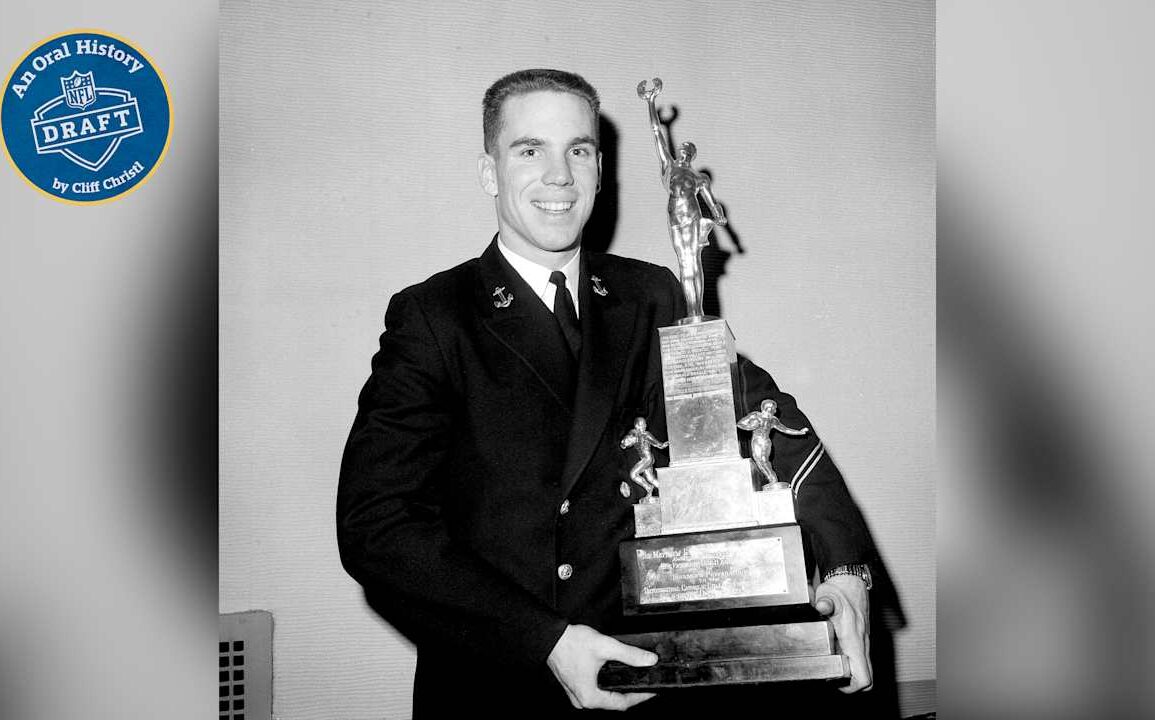
While Hayes didn’t sign until 1965 and Staubach until 1969, Renfro made the Pro Bowl and Associated Press’ second all-pro team as a rookie enroute to the Cowboys finishing .500 for the first time.
Over the next two years Dallas won the NFL’s Eastern Conference, but lost twice to Green Bay in the league championship. In 1970, the year the NFL-AFL merger was finalized, the Cowboys won the newly named National Football Conference before losing to the Colts in the Super Bowl. A year later, the Cowboys whipped Miami, 24-3, to win Super Bowl VI and their first league title.
From 1965 through 1985, they never had a losing season, won 13 division tiles and captured Super Bowl XII.
The key to their success? Stability. Same people, same lines of authority, same system for the first 29 years of their existence.
Throughout that entire period, Tex Schramm ran the team initially as vice president-general manager and then as president-GM. Tom Landry was the head coach and had final say on player personnel. Brandt oversaw the personnel department.
Schramm had spent 10 years working for the Rams, first as publicity director and then as GM. Hired in 1947, he was on the inside when the Rams developed the NFL’s first sophisticated scouting department. Hence, when he took over the Cowboys, Schramm followed the same blueprint. The one designed by Rams owner Dan Reeves and executed by scout Eddie Kotal.
Landry also had cut his teeth as a coach with a winning organization. He ran the New York Giants’ defense as an assistant for six years, when they won one NFL championship and lost two other title games.
Schramm (Christl & Don Langenkamp interview, circa late 1970s): “In the first 10 years, I spent 80 percent of my time in personnel. Tom Landry has always had the final word in the draft.”
Red Hickey, Cowboys assistant coach, 1964-65, and head scout, 1966-81 (Christl interview, Jan. 10, 1979): “Clint Murchison, who owns the club, you hardly ever see him. You don’t even know he exists hardly. He lets Tex Schramm, president, general manager, run the ballclub. Tex lets Gil run the personnel department. Tex lets Landry coach. And we all go to work.”
NFL insiders will tell you that not all coaches are good evaluators of talent; and what’s more, some head coaches want a say in the draft but won’t invest the necessary time to prepare for it.
Not Landry.
Dick Mansperger, Seattle director of player personnel and former Dallas scout (Christl interview, Feb. 15, 1979): “He’s a great evaluator. He has an objective view of things. He very carefully goes over everything with Gil. Landry listens. He’s amazing.”
Schramm hired Brandt based on what he said was a long-held secret, one he remembered from when they first connected. It was in 1952, when the Rams as defending NFL champions were going to play the College All-Stars at Chicago’s Soldier Field. Schramm was GM at the time; Brandt, a 20-year-old Milwaukee native.
For three weeks before the game, the All-Stars practiced at what was then St. John’s Military Academy in Delafield, Wis., located roughly 25 miles west of Milwaukee.
Schramm (Christl & Langenkamp interview, circa late 1970s): “(Brandt) was a friend of Elroy Hirsch. Elroy was on our team, and we were going to play the College All-Star team. We wanted someone to sneak in (to their practice) and see what the All-Stars were doing. I think Gil was the guy Elroy got to go and look at what they were doing. In those days, you didn’t know if they’d run a single-wing or split-T or what the hell they were doing. But Gil started doing little chores for the Rams.”
Brandt’s main source of income when the Cowboys hired him was from his work as a baby photographer for three Milwaukee hospitals. But he yearned to land a fulltime job in the NFL and brought a tireless work ethic with him. Brandt expected the same of his scouts.
Dick Steinberg, New England’s director of player development and former Dallas scout (Christl interview, circa early 1980s): “He works the hell out of his people. He’s extremely tough, but he’s not all that involved in evaluation. He doesn’t go out. He doesn’t look at films. But he’s a hell of an administrator.”
Reed Johnson, Denver director of player personnel and former Dallas scout, 1973-80 (Christl interview, 1983): “Gil does a good job of reading your reports. He has the capacity to take reports with him on airplanes, at home, at the office. He can sit there and read 15 or 20 and digest. He knows what to look for, what things jump out at him. And he has such a tremendous capacity to retain information. He’s like a damn elephant. He’s amazing.”
Bucko Kilroy, New England general manager and former Dallas scout (Christl interview, Jan. 11, 1979): “They’re very thorough. It’s a holdover from the Rams organization. When they draft in Dallas, the only ones present are Schramm, Brandt, Landry, Hickey.”