




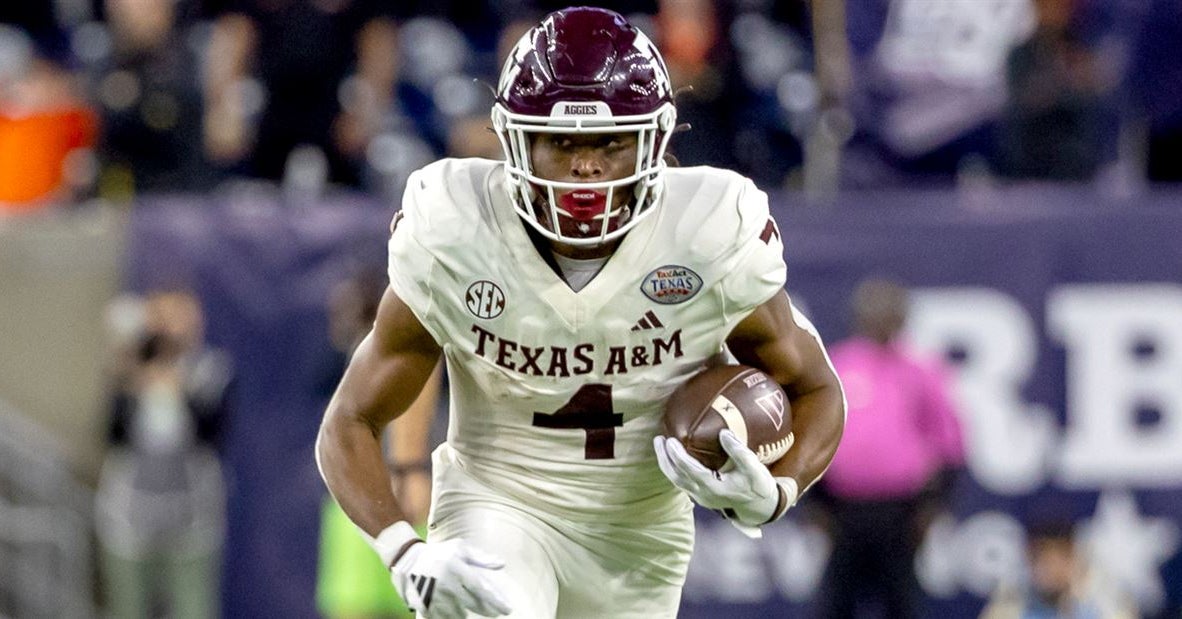
ESPN’s Bill Connelly uses his SP+ system to rank college football teams, and it’s described as a tempo- and opponent-adjusted measure of college football efficiency. Connelly’s projections for 2025 going into spring ball and after national signing day have Texas A&M as the 12th best team in the country just behind Clemson and ahead of Michigan.
He created the system when he was with Football Outsiders in 2008, and it’s intended in Connelly’s words “to be predictive and forward-facing”. It doesn’t necessarily give a program credit for big wins or an impressive strength of schedule. It’s just a measure of the most sustainable and predictable aspects of football and at how teams should likely perform moving forward. It’s based on all three main components in all: returning production (the of returning production numbers are based on transfers and attrition), recent recruiting (the caliber of a team’s new stars or potential replacements in the lineup determined by recruiting rankings with the most recent class carrying the most weight). and recent history on the field.
He has consistently been more bullish on the Aggies than most other observers, having them 13th after last season’s 8-5 campaign, ranking them 16th after a 7-6 season in 2023, as the 35th best program in college football after the 2022 season despite a 5-7 finish, as the sixth best team in the nation coming out of the 2021 campaign even though the Aggies wound up 8-4 and not in the top 25 of the Associated Press or USA Today polls.
On paper, the Aggies do bring back most of the lineup that started either the regular season finale versus Texas, the bowl game against USC, or were injured and lost for the season prior to that. He bases a lot of his projections on returning production and the Aggies are sixth overall nationally in Connelly’s analyses. Thus, Connelly has the Aggies among his “buy, buy, buy” teams in terms when comparing his ratings to ESPN’s way too early top 25 (which is compiled separately).
When Schlabach is putting together the Way Too Early Top 25, he considers both assumed quality and potential wins and losses. SP+ only cares about the former. As mentioned above, the SEC remains the sport’s deepest conference (and best recruiting conference, which obviously plays a role in these projections), even if the Big Ten has as many or more top-tier title contenders. And all five of the teams mentioned here (including A&M) rank more than 10 spots higher in SP+ than they do on Schlabach’s list. But they’ll also probably lose lots of games. That’s how conference depth works. OU is projected 20th, but its average projected win total is just 6.3 thanks to a ridiculous schedule. Among these five teams should come a couple of CFP contenders and a couple of disappointments, but from a power ratings perspective, they all have top 20 potential.
As Connelly noted, the most understated issue for the Aggies may not be their own play but that of their opponents. As of today, A&M plays in the Southeastern Conference, a league that has the highest average SP+ rating by far (14.9 as compared to the Big Ten’s 8.3) and ranks first in offense and defense. He wrote that “last season, the SEC had one team that finished worse than 52nd in SP+, while the Big Ten had seven.” As a result, even the bottom end of the Aggies’ schedule is fraught with a peril, something we’ll examine later in a separate piece.