

Question: When’s the last time you heard of a big-time college sports athlete being declared “academically ineligible?”
Answer: I dunno. Maybe in the late 20th century.
Another question: When’s the last time you heard about a school’s graduation rate?
Answer: The first Obama administration?
In case you haven’t noticed, big-time college sports ain’t what it used to be.
I come from the perspective of someone who can barely recall a time when I wasn’t interested in college sports. My father took a job as the assistant athletics director at Villanova when I was 6, and thus began an endless love affair with college basketball. I can truthfully say that what I call my “foundation sports” were Major League Baseball (my dad had connections, there, too) and college basketball. The Philadelphia Palestra remains my all-time favorite of the 206 venues — yes, I keep count — in which I have seen college basketball. The drift of college sports into its current state of, well, madness is something I care deeply about.
Did it ever really make sense? Maybe, maybe not. As I’ve pointed out countless times, we are the only nation on earth in which its institutions of higher learning routinely provide entertainment for the masses with sporting activity. We’ve been doing it since Harvard and Yale began rowing against each other in the mid-19th century and we have clearly embraced it. Can you imagine waking up in Lexington, Ky., without Wildcat basketball? Can you imagine awakening in Tuscaloosa, Ala., without Crimson Tide football? Of course, not.
Canada? Their approach is decidedly low key. It’s never been a national obsession. And in the rest of the world adolescent athletes join clubs. It’s not up to the schools to train and develop athletes.
In America, scholarships were the key, and for decades and decades the system worked. Oh, it was flawed, and some institutions were more, shall we say, honorable, than others.
The fact is that most interested people acknowledged that a full tuition scholarship was sufficient and worthy compensation for a young athlete’s participation in college sports. I believe I speak for millions of parents who wrote four years’ worth of college checks to send a young boy or girl to college (I had one of each) that the idea of a freebie education was a pretty good deal. There was no need to pay the athletes. They already were doing very well in our estimation.
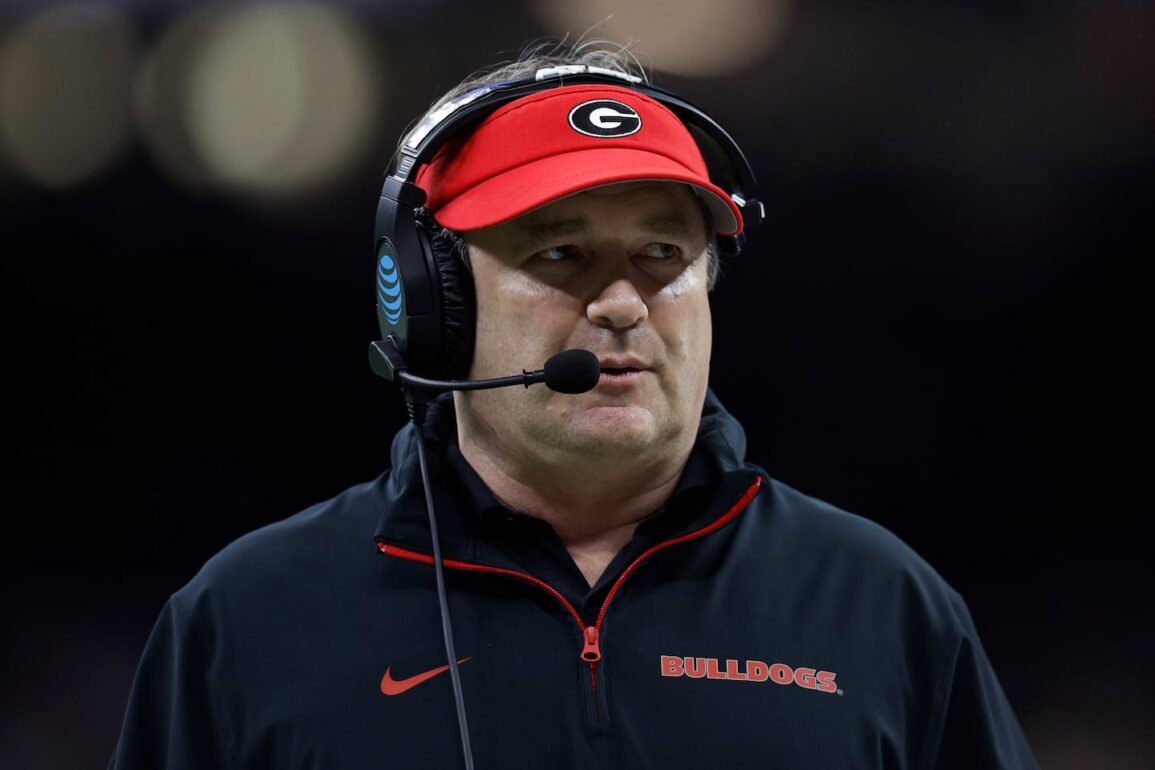
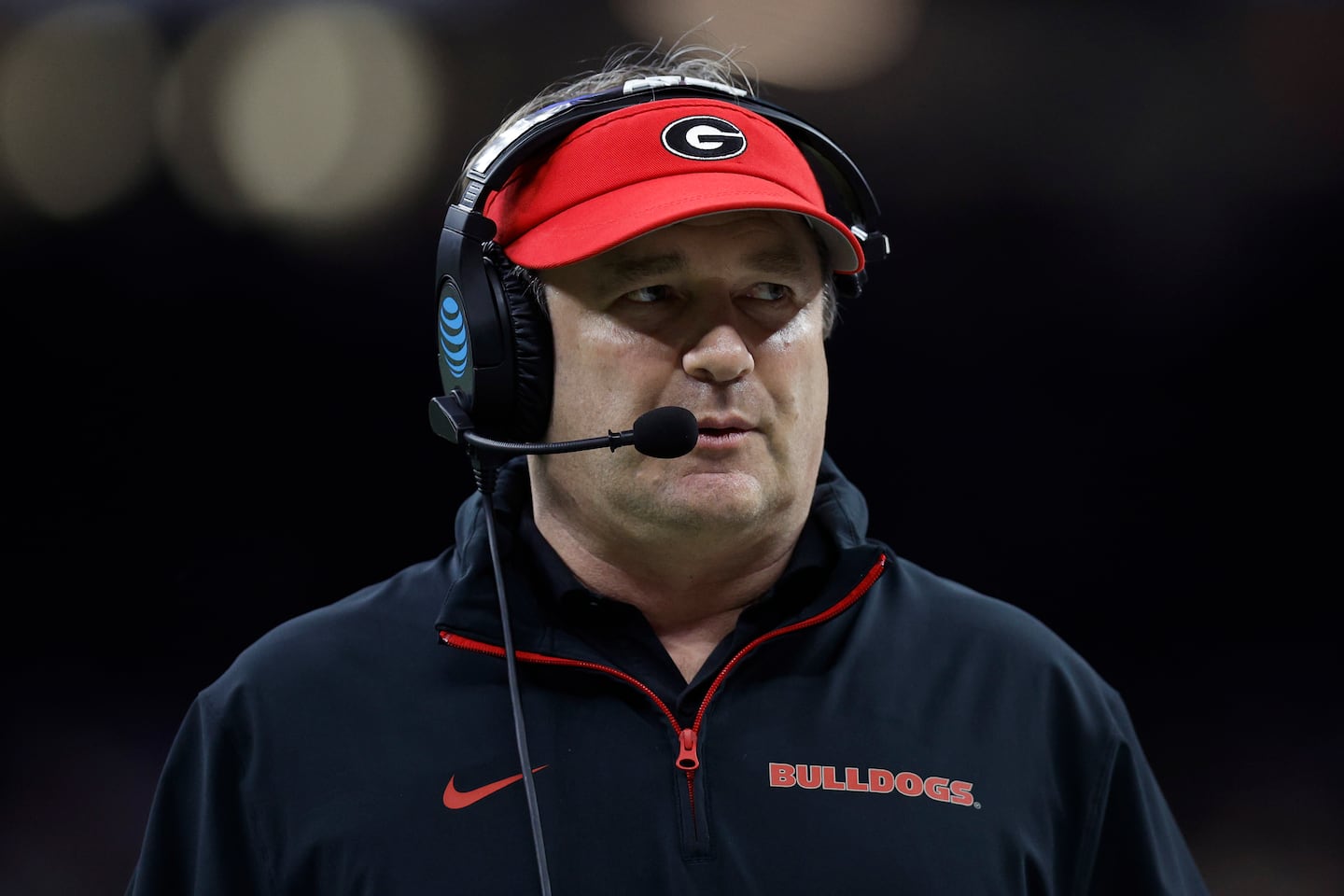
I believe that system worked as long as the coaches’ salaries were reasonable, and for a long time they were. The system went unchallenged as long as coaches were making five figures, or even low six. But as the coaches’ salaries escalated to the point where Georgia football coach Kirby Smart is now earning $13.2 million a year and Kansas basketball mentor Bill Self is leading the hoop coaches with $10.6 million annually it’s no shock that people with the players’ interests in mind were saying, “Hey! What’s wrong with this picture? Who’s doing all the dirty work? It’s not the coach!”
The NCAA kept the lid on all this as long as it could, but now said lid has been blown off, never to be replaced. Welcome to the world of name, image and likeness (NIL) and the transfer portal.
Concurrent with this is the complete abrogation of common sense with regard to the geography of college conferences. I don’t know whether it’s sad or funny that we were able to watch the women’s basketball Big Ten championship game featuring USC and UCLA, conducted in Indianapolis.
That would be the Big Ten, which now has 18 teams ranging from New Brunswick, N.J., to Los Angeles. That goes along with the Big 12, which now has 16 teams, or the Southeastern Conference Conference (SEC), which likewise has 16.
Once upon a time, there was a conglomeration of schools known as the Pac-10 Conference. It consisted of two schools from the state of Washington, two schools from the state of Oregon, two schools from the San Francisco Bay area, two schools from Los Angeles, and two schools from the state of Arizona. Travel was concise and logical. It made perfect sense.
The Pac-10 no longer exists.
I can tell you whom to blame for this ludicrous state of affairs. Do not blame the players (excuse me, “student-athletes” — ha!). Do not blame the coaches. Do not blame the directors of athletics. Blame the college presidents. The college presidents are the ones who have been seduced by the lure of television dollars. None of this happens without their say-so.
The NCAA also might have saved itself had there been a more rational and foresighted reaction to the 2015 class action suit, O’Bannon v. NCAA, when former UCLA star Ed O’Bannon reacted to seeing his image and likeness portrayed in a video game for which he had received zero compensation. The NCAA predictably stonewalled it, and now is paying an enormous price.
The system was hard to defend in the best of times. But now we have a big-time collegiate world in which young men and women are auctioning themselves off to the highest bidder on an annual basis and countless players we are watching in the NCAA basketball tournament are playing for their third school, or, in the case of Auburn’s Chad Baker-Mazara, his fourth. In the old days if someone transferred, he or she had to sit out a year. No longer. Some coaches are recruiting exclusively from the transfer portal. Forget about importing a freshman.
That being the case, go back to my original questions. When does anyone ever, ever, ever mention academics while all this is going on? Eligibility? What’s that? I honestly wonder if some of these kids even know where the classroom buildings are at their schools. Schools used to be excoriated for poor graduation rates. I haven’t heard that phrase in years.
The thing is, people still love the product. Look at what’s happening in New York, where they have rediscovered college basketball thanks to Rick Pitino and St. John’s. After years of relative fan indifference, the Red Storm fans packed Madison Square Garden this year to see a well-coached team that has been bankrolled by a billionaire alumnus named Mike Repole. No one is asking what anyone’s major is.
I still love the product myself. I confess to being a hopeless enabler. But I am embarrassed, OK? Where have you gone, Bill Bradley? Our nation turns its lonely eyes to you.
Bob Ryan can be reached at robert.ryan@globe.com.