


By Ralph Russo, David Ubben and Sam Khan Jr.
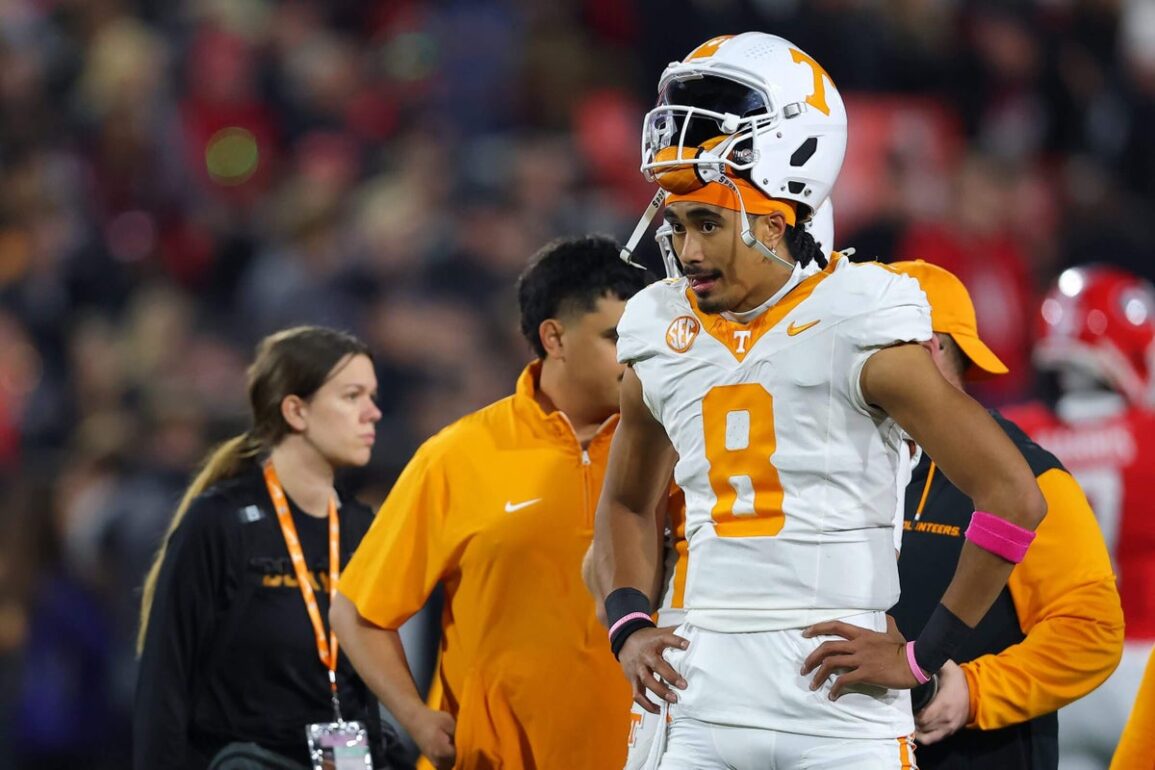
The Orange and White game at Tennessee figured to be a relaxed affair in Knoxville this weekend, with the Volunteers coming off of a successful season in which they made the College Football Playoff.
Instead, multimillion-dollar contracts and twice-a-year de facto free agency have brought drama to Saturday’s spring game at Neyland Stadium in the form of what appears to be college football’s first high-profile holdout, with some similarities to what NFL players have been doing for years.
Advertisement
Tennessee quarterback Nico Iamaleava did not attend practice Friday, according to a program source familiar with the situation, raising questions about his future with the Volunteers less than a week before the spring transfer portal window opens. A second program source said Iamaleava has not been in contact with Volunteers staff as of early Friday evening.
“There’s always a first. It started with opting out of the bowl game. I would say, until there’s a bit more formality in terms of the way contracts are written and enforcing penalties for not fulfilling them, this type of thing could continue to happen,” said Marc Spiegel, founder of the 502 Circle, Louisville’s name, image and likeness collective.
Iamaleava’s absence from practice was unexpected, said the first person, who spoke to The Athletic on the condition of anonymity because the practice was closed to the public. Two other people briefed on the situation said there are ongoing talks between the player’s representatives and the NIL collective that supports the school’s athletes about reworking his contract, and that Iamaleava, set to make $2.2 million this year, is seeking closer to $4 million.
On3 first reported Thursday that Iamaleava was renegotiating his deal with the group. Iamaleava’s father, Nic, criticized that report in a social media post.
“More games being played off the field than on the field,” he posted.
In the NFL, players commonly skip offseason activities — both voluntary and mandatory — and training camp as a way of putting pressure on their teams to renegotiate a contract. Often, the resolution is a new contract. Last year, San Francisco receiver Brandon Aiyuk ended his holdout in late August after signing a four-year, $120 million deal.
Bengals receiver Ja’Marr Chase missed almost the entire offseason and training camp last year trying to get a new deal, which eventually came in March, when he signed a four-year, $161 million contract.
Advertisement
NFL teams have some leverage in these situations. Players under contract can hold out, but they can’t go anywhere unless the current team trades them. The current college system gives the player far more power. Three weeks into the 2024 season, UNLV starting quarterback Matthew Sluka decided to walk away from the team over an NIL dispute; he has since transferred to James Madison.
Much to the chagrin of college coaches and administrators, there are currently two periods when a player can enter the NCAA transfer portal and be immediately eligible to play for another school. The first was in December and lasted 20 days. The next opens next week, a 10-day window starting on Wednesday, April 16.
Speigel said it’s uncommon for players and agents to try to reopen contract talks right before the portal opens. And if it does happen, it stays behind the scenes.
“In football, you want to work (ahead), even doing things well before spring practice begins,” he said. “You want to know who your core is gonna be and get them locked up. It’s more and more like professional sport.”
The threat of Iamaleava leaving puts Tennessee in a bind. The Volunteers have no obvious replacement on the roster and there is nothing in the quarterback’s current deal that prevents him from breaking it and playing for another school, according to a person familiar with the terms.
As NIL deals have evolved, buyouts have become more common. And with a new revenue-sharing system on the horizon for college sports, that will permit schools to pay athletes directly for NIL rights, schools are trying to make contracts more restrictive.
Iamaleava, whose deal was signed more than two years ago, seemingly holds all the leverage — but maybe not as much as it would appear at first glance. There must be another football program willing to pay him, presumably more than the $2.2 million he is due this year.
Advertisement
A general manager at a Power 4 school, speaking on condition of anonymity to assess another team’s player, said he wouldn’t pay more than that for Iamaleava: “Possibly even less, maybe $1.5 to $2 million. Nico just isn’t amazing.”
Coaches assess their rosters during the spring to fill needs in the second portal window. But the number of teams that could be a fit for Iamaleava financially and competitively appears limited.
“I don’t know where that money’s going to come,” said Shane Burnham, director of football for Ascension Sports Consulting, which represents and helps place college players when they transfer. “I don’t think there are many people that were like, ‘Hey, we’re gonna go find our quarterback in the spring portal.’ Most people who have the kind of money he’s looking for found their quarterback back in December.”
SEC rules also essentially take Tennessee’s conference rivals off the table as a potential landing spot for Iamaleava. If an SEC player wishes to transfer to another school within the conference, he must enter the portal before Feb. 1 — which means the player must enter during the winter transfer portal window, which ran from Dec. 9-28 this year.
NCAA rules prohibit schools from recruiting players before they have officially entered their names into the transfer portal, but most within the sport agree that tampering is rampant and almost impossible to stop. There are myriad ways for schools to communicate interest in a player through their coaches, family members, trainers, agents or even friends.
Iamaleava is entering his third season at Tennessee, his second as the starter. The former five-star recruit from California was among the first players reported to receive a multi-million dollar NIL deal from a collective. This was to be the last year of his original four-year, $8 million deal. The market for starting quarterbacks has gone up. Former Georgia quarterback Carson Beck received a deal reportedly worth $4 million to transfer to Miami earlier this year.
Iamaleava’s having a multiyear contract makes this situation somewhat unique. “Most (players) are (one-year deals),” Spiegel said. “Some of them, a small number, could be multi-year.”
Advertisement
The people familiar with Iamaleava’s contract said they believed his representatives had contacted other schools during the winter, trying to gauge interest in the quarterback.
That deal with the Vol Club ended up drawing scrutiny from NCAA investigators, which led to the attorney general of Tennessee suing the NCAA and the association dropping its rules against using NIL as a recruiting inducement.
Iamaleava helped the Volunteers reach the College Football Playoff last year with a solid sophomore season. He threw for 2,616 yards, 19 touchdowns and five interceptions, and Tennessee’s season ended with a blowout loss to eventual national champion Ohio State in the first round of the CFP.
Tennessee is expected to be a Top 25 team again in 2025, though how well it fares in the rugged SEC is likely to be greatly determined by how close Iamaleava comes to reaching that five-star potential.
Jake Merklinger, a redshirt freshman who played in two games last season, is the likely No. 2 behind Iamaleava for the Vols.
This spring flirtation with the transfer portal appears to have soured some (or many) Vols fans and supporters on Iamaleava, but it’s hard to see how the team would be better without him.
My God, we’ve lost it.
Enraged Radio Caller Burns His Nico Shirt Live On The Air: https://t.co/wRB1WLpBBR pic.twitter.com/Ck60IRaPYV
— FOX Sports Knoxville (@FOXSportsKnox) April 11, 2025
In the NFL, contract holdouts often end with everybody — from players to management to fans — celebrating the end and quickly moving on to the business of trying to win games.
This is all new to college football, and whether the business can be brushed aside so easily is to be determined.
“Everything is a copycat,” the GM said. “I think it’s something that’s going to happen more often.”
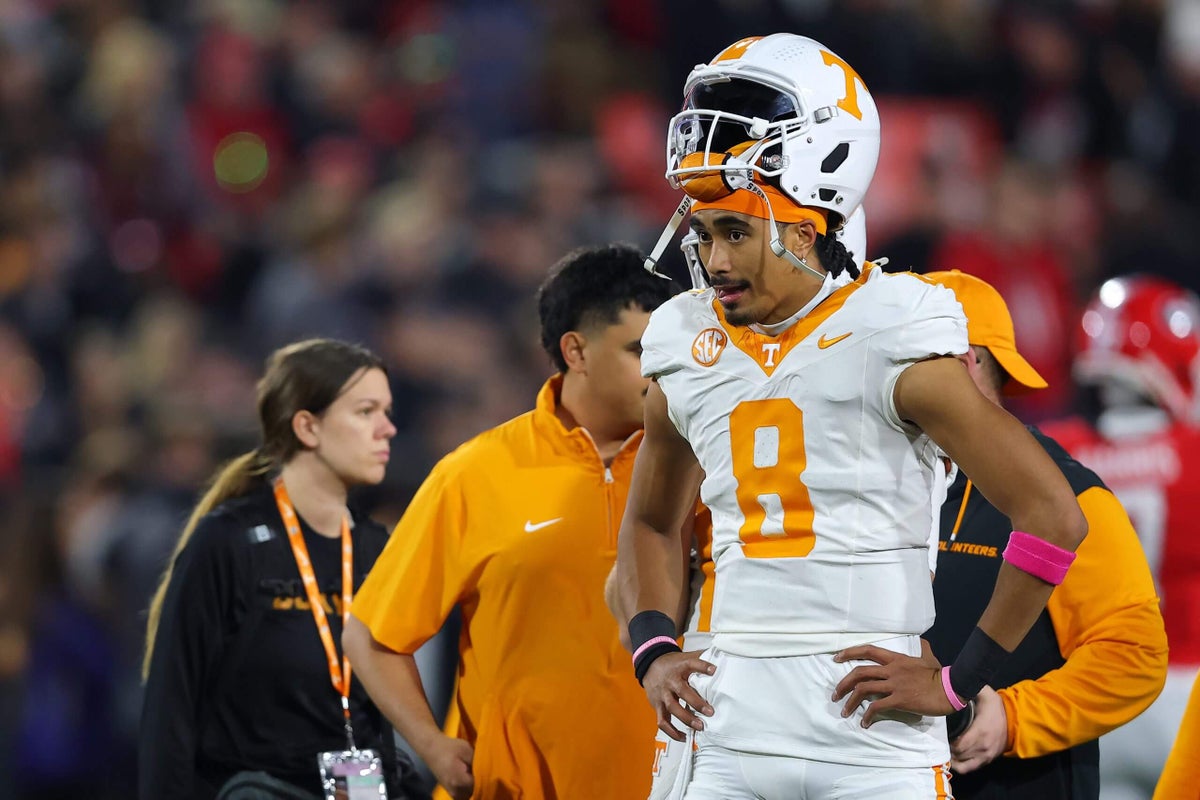
(Photo: Kevin C. Cox / Getty Images)