


By Matt Baker, Manny Navarro and Grace Raynor
Spring practice is heating up at several stops around the league. It’s time to talk ACC football.
Matt Baker, Manny Navarro and Grace Raynor are here to answer your questions.
How’s the Belichick Era going at UNC? Will Duke win the “state championship” again in 2025? — Regina L.
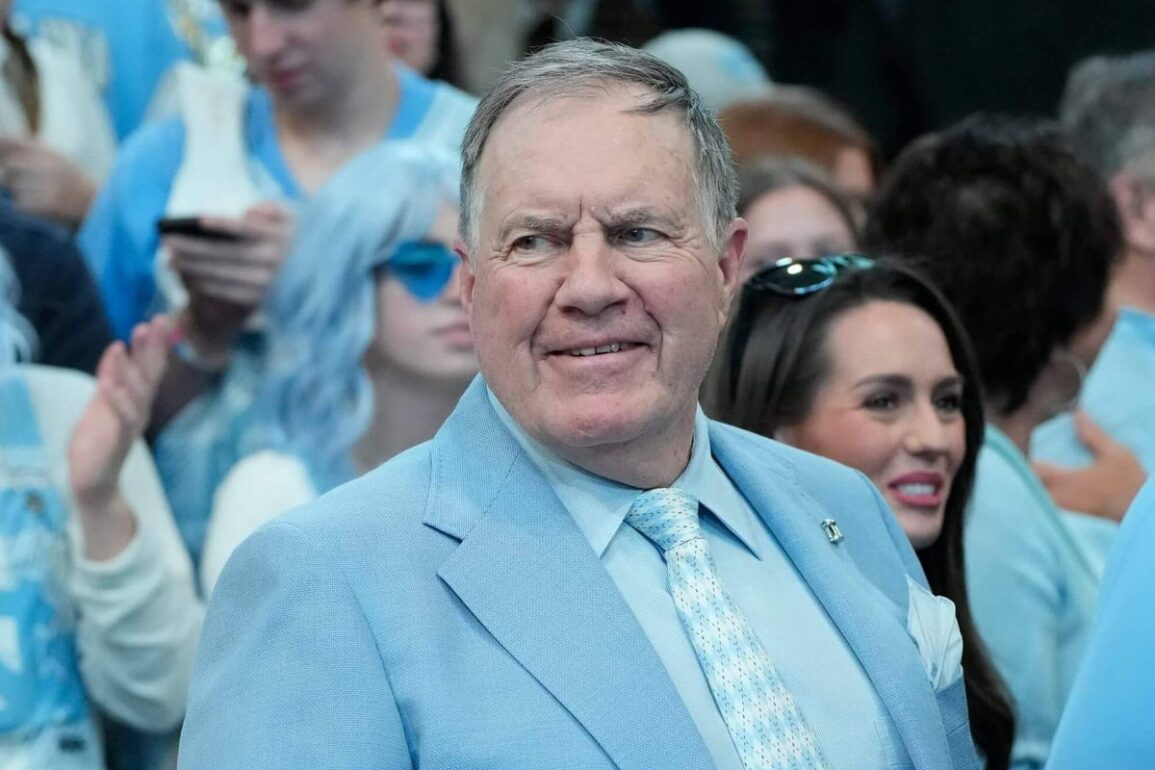
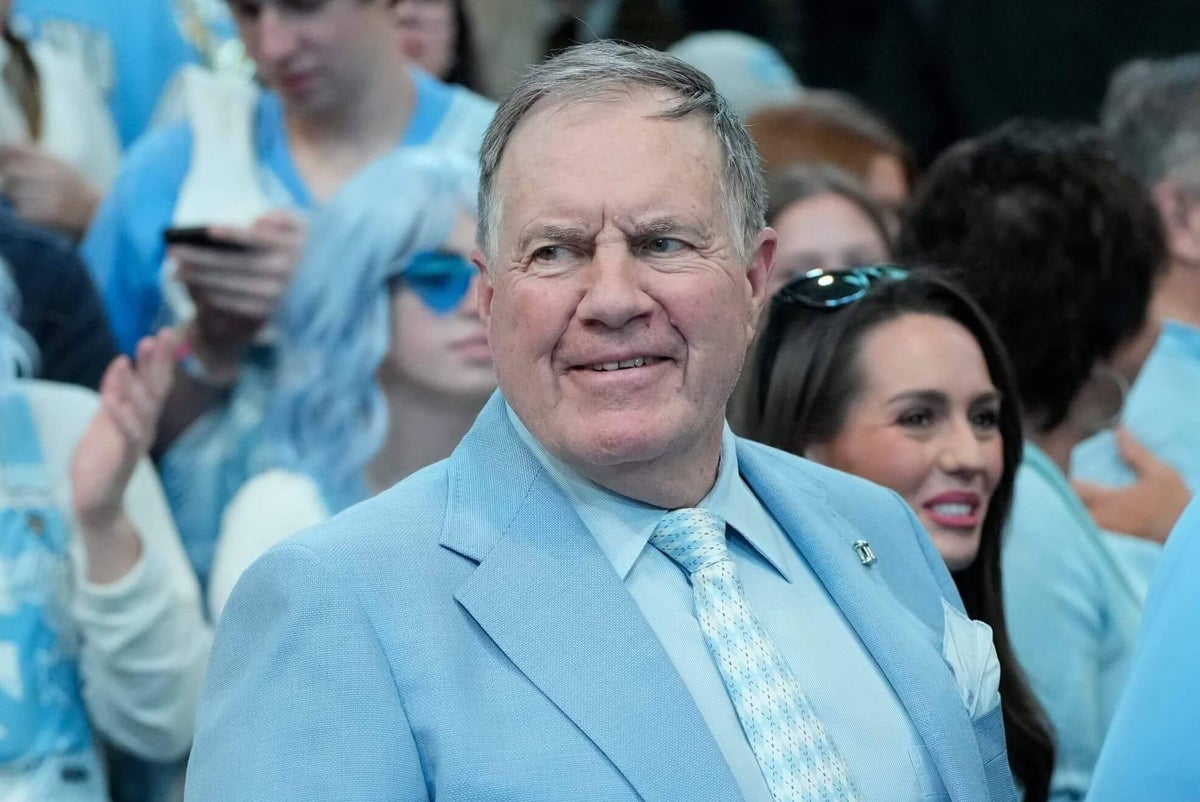
It’s too early to definitively know how things are going in Chapel Hill, but spring ball has started and Bill Belichick has officially filled out his coaching staff. So much of UNC’s success and whether the Tar Heels can avenge that loss to Duke from last season — when they blew a 20-0 lead — hinges on UNC’s defense and if the Belichicks can clean it up.
Advertisement
Bill’s son, Steve, is the defensive coordinator and linebackers coach. He worked for his dad for 12 years with the Patriots before jumping to the college game last year as the defensive coordinator at Washington. The Huskies defense ranked No. 28 last year (compared to No. 72 for North Carolina).
UNC had explosive offenses under Mack Brown but could never match that output on defense. If there’s anyone who can instill a sense of urgency and discipline in players, it might be Belichick. But I don’t know that the Tar Heels are all of a sudden going to start contending for ACC championships. This feels like a multi-year rebuild. — Raynor
“We’re recruiting a lot of good players.” 👀
Bill Belichick with @CollegeGameDay on the Duke-UNC rivalry and UNC college football 😤 pic.twitter.com/ucBzM6T3RF
— College GameDay (@CollegeGameDay) March 8, 2025
Can you give a breakdown of how the new ACC television viewership bonuses would have looked over the last 3-5 years? — Samantha C.
I can’t give you a specific breakdown because the formula isn’t public (and, last I heard, hadn’t been finalized yet). But I took the last four years of data compiled by Sports Media Watch and spliced the numbers a few ways to see how schools would have stacked up against each other. Viewership numbers aren’t available for games on the ACC Network or some streaming services, and that’s OK; if a game isn’t shown on a major network, that tells us how little value TV executives see in it.
I ranked the teams by most games with at least 4 million viewers, most games with at least 1 million viewers, fewest number of games below 500,000 viewers and most games with available TV information. Put it all together, and we get an imperfect list that looks like this:
- Tier 1: Florida State, Clemson
- Tier 2: Miami, North Carolina, Louisville
- Tier 3: Georgia Tech, Stanford, Syracuse, Pitt
- Tier 4: North Carolina State, Cal
- Tier 5: SMU, Boston College, Virginia Tech, Wake Forest, Virginia, Duke
No surprises for me in the top two tiers (Georgia Tech was on the 2/3 bubble). SMU was lower than I expected, but the Mustangs were weighed down by being in the American Athletic Conference for three of the four years. I thought NC State would be higher, but eight of its last 13 games on the list failed to draw at least 1 million viewers.
Three other broad things jumped out.
- Cal and Stanford were higher than I expected because the traditional Pac-12 After Dark window boosts numbers.
- If a matchup of teams from the lower/middle class drew a good number, it was almost always on a weeknight.
- And scheduling Notre Dame and other big brands helps a lot. Duke’s three games with more than 4 million viewers were in 2023 against Clemson, Florida State and Notre Dame.
If teams are looking to boost viewership, those are three factors worth keeping in mind. — Baker
Why would the ACC make it easier for teams to leave the conference after 2030? — Brian C.
No one gets everything they want in a settlement. The ACC, however, does get something out of this, aside from a concession that helped end costly litigation that was damaging the league’s reputation. The conference recently lost an appeal to Florida’s Supreme Court, putting FSU’s lawsuit on a faster track than the ones filed by the ACC in North Carolina. If Florida judges continued to rule against the ACC, the league risked the possibility of spending all this money on legal fees only to watch the Seminoles leave for nothing. Instead, the ACC sacrificed some long-term stability for short-term stability.
Advertisement
The other argument I’d make is that clarity on future exit terms helps everyone, not just the schools that want out. Let’s say Florida State, Clemson, North Carolina and Miami leave in 2030. At $75 million each, that’s $300 million for the conference. Maybe the league can use that $300 million to poach a couple of Big 12 programs and become the clear best-of-the-rest conference. — Baker
Will we look back and think the FSU/Clemson settlement was the beginning of the end for the conference? — Alec J.
That will be a common perception, Alec, but I don’t think it’s totally accurate or fair. I just shared one of the possibilities where the deal works out relatively fine. But let’s assume, for the sake of this question, the ACC is no longer a power conference by 2037 and that the Seminoles and Tigers are in the SEC/Big Ten or some sort of super league. If that’s the doomsday scenario, here’s my question: What could have been done to prevent it?
Even if the ACC’s grant of rights and ESPN contracts held up in court, the premier league could have waited until those deals expired (2036) to add Clemson, Florida State, et al. By then, the ACC’s list of potential backfill candidates might be weaker if Big 12 teams were locked into a new TV contract.
I’m not trying to say the settlement was a major victory for the ACC. I think FSU and Clemson were bigger winners. But if the ACC is in a death spiral, it began before last week’s settlement. Otherwise, the league and its top two brands wouldn’t have been suing each other. The beginning of the end, to me, would be the ACC’s decision to take a long-term ESPN deal in 2016 — a deal that, in full disclosure, I thought was wise at the time. — Baker
Nervous Louisville fan here. What are the chances of a Big Ten/SEC school using larger NIL resources to poach players at “lower-tier” programs like Louisville? What are the chances of someone like Isaac Brown leaving to chase the bag and to get to play in several nationally televised, high-profile games to potentially boost their draft stock? — Sam S.
Sam, with all due respect, where have you been? Before we dive into a league-wide perspective, I’ll say this for the Cardinals: They’ve done a good job keeping their best players home.
Advertisement
But as a whole, the ACC had 21 players ranked among the top 100 transfers by 247Sports who left their respective schools at the end of last season, and only two moved to another program within the conference. One was Louisville offensive lineman Monroe Mills, who went to Virginia, and the other was Wake Forest offensive lineman Luke Petitbon, who left for Florida State. Twelve other top-100 transfers ended up at SEC schools, three landed in the Big Ten, two in the Big 12 (at big-spending Texas Tech), one at Notre Dame and one at a non-Power 4 school (Oregon State).
On the flip side, the ACC reeled in 22 top-100 players as a league, including 14 from other Power 4 leagues — nine from the Big Ten, two from other ACC schools, two from the SEC and one from the Big 12. Eight moved up from non-Power 4 programs. However, only six of the 14 P4 transfers have started double-digit games in their careers.
Going forward, the SEC and Big Ten are always going to have more resources to swipe away the best players in lower-tier conferences. The key for ACC teams is going to be how they restock the shelves every year. — Navarro
Is any ACC team ever going to recruit to a level where it can be a powerhouse? Notre Dame is close. Boston College, Pittsburgh, NC State, North Carolina, Syracuse, Stanford, SMU and Miami always produce a first-rounder every few years. But they never get much better. Is that going to change or are these ACC programs in football purgatory where the fans watch but have no real hope of winning beyond a first-round exit? — C. T.
The transfer portal has obviously changed things, but recruiting still matters. The only ACC program that has averaged a top-10 recruiting class over the past decade is Clemson, which makes it no surprise that the Tigers are the only program in the league to win a national championship during that span.
The other schools to win national titles since 2015 — Alabama, LSU, Georgia, Michigan and Ohio State — have also averaged top-10 classes over that span. Two of the other four top-10 recruiting programs have at least made the College Football Playoff semifinals in the last 10 years: Texas and Oklahoma. The other two are Oregon (made the 16-team field as the No. 1 seed in 2024) and Texas A&M, which hasn’t made the field once.
Notre Dame is right outside the top 10 with an average class rank of 11th since 2016. Miami and Florida State are the only other ACC programs in the top 20 for the past decade.
The Hurricanes have had the top class in the ACC in each of the last three years. If you look at the average recruiting rankings for the last three years, Miami and Notre Dame are in the top 10. Clemson and Florida State are in the bottom half of the top 20. That’s it. — Navarro
Advertisement
Heading into spring practices, what teams are your biggest questions in the league, biggest variances as you see them? Ignoring the obvious Miami quarterback (Carson Beck), who are some under-the-radar transfers that you are looking forward to in spring ball to get a real idea of how they fit? — Brian H.
Let’s start with teams. We talked about North Carolina in another answer, but how the Tar Heels look under Belichick has to be the biggest question mark in the league this year. There’s a ton of intrigue in Chapel Hill, where the quarterback situation is definitely something to watch. Is Bryce Baker, the four-star freshman, the favorite?
I’m also curious to see if Clemson will return to contending for a national championship with Cade Klubnik back for his senior year. Can Duke — with a tougher schedule — repeat its Year 1 success under Manny Diaz with former Tulane quarterback Darian Mensah running the offense? And, of course, I think we’re all fascinated by Florida State and what might happen in Tallahassee after a disastrous 2024 for Mike Norvell and the Seminoles.
As for under-the-radar transfers to watch, I’ve got my eye on a few — Cal quarterback Jaron-Keawe Sagapolutele (Oregon), Georgia Tech wide receiver Eric Rivers (FIU), Wake Forest offensive lineman Fa’alili Fa’amoe (Washington State), Virginia quarterback Chandler Morris (North Texas) and SMU cornerback Marcellus Barnes Jr. (Syracuse).
Sagapolutele, a true freshman from Hawaii, shot up the recruiting rankings after a strong performance at the Elite 11 Finals last June. He initially signed with Oregon over Cal but changed his mind shortly after and “transferred” to Cal.
Rivers was the first AP All-American in FIU history and had 1,162 receiving yards last year. Fa’amoe followed Jake Dickert from Washington State to Wake Forest and should give the Demon Deacons a proven presence up front. Morris is on his fourth school but may be ready for a big year after earning second-team All-AAC honors in 2024. And Barnes looked poised for a special freshman year at Syracuse before being slowed by injuries. — Raynor
If Fran Brown can get Syracuse to a bowl game this year, is the SEC calling him up? — David P.
It should! Syracuse is a hard place to win at, and if Brown can win — and recruit — there, he can do it anywhere. He comes from the SEC and is a Kirby Smart protege. He’ll need to do his part, and it may take more than one more strong season at Syracuse. But Brown feels like someone who could be on the fast track to move up if his Syracuse career goes the way we envision it might. — Raynor
(Photo: Bob Donnan / Imagn Images)