


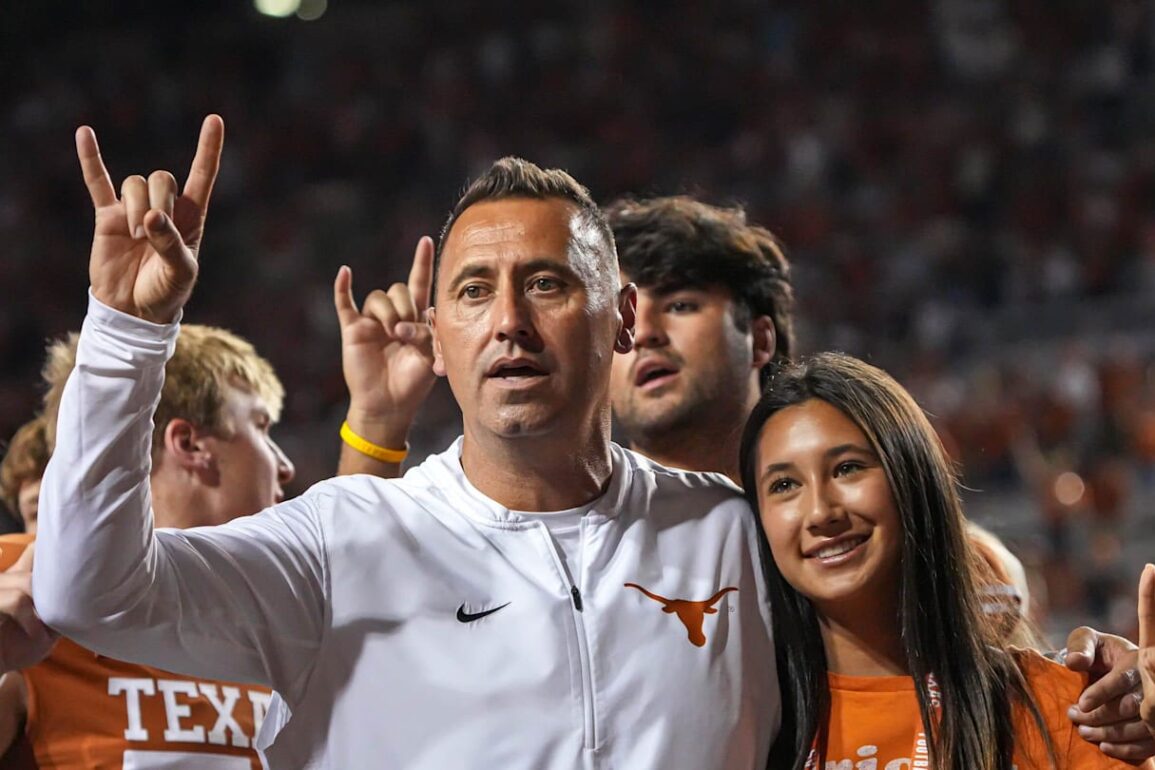
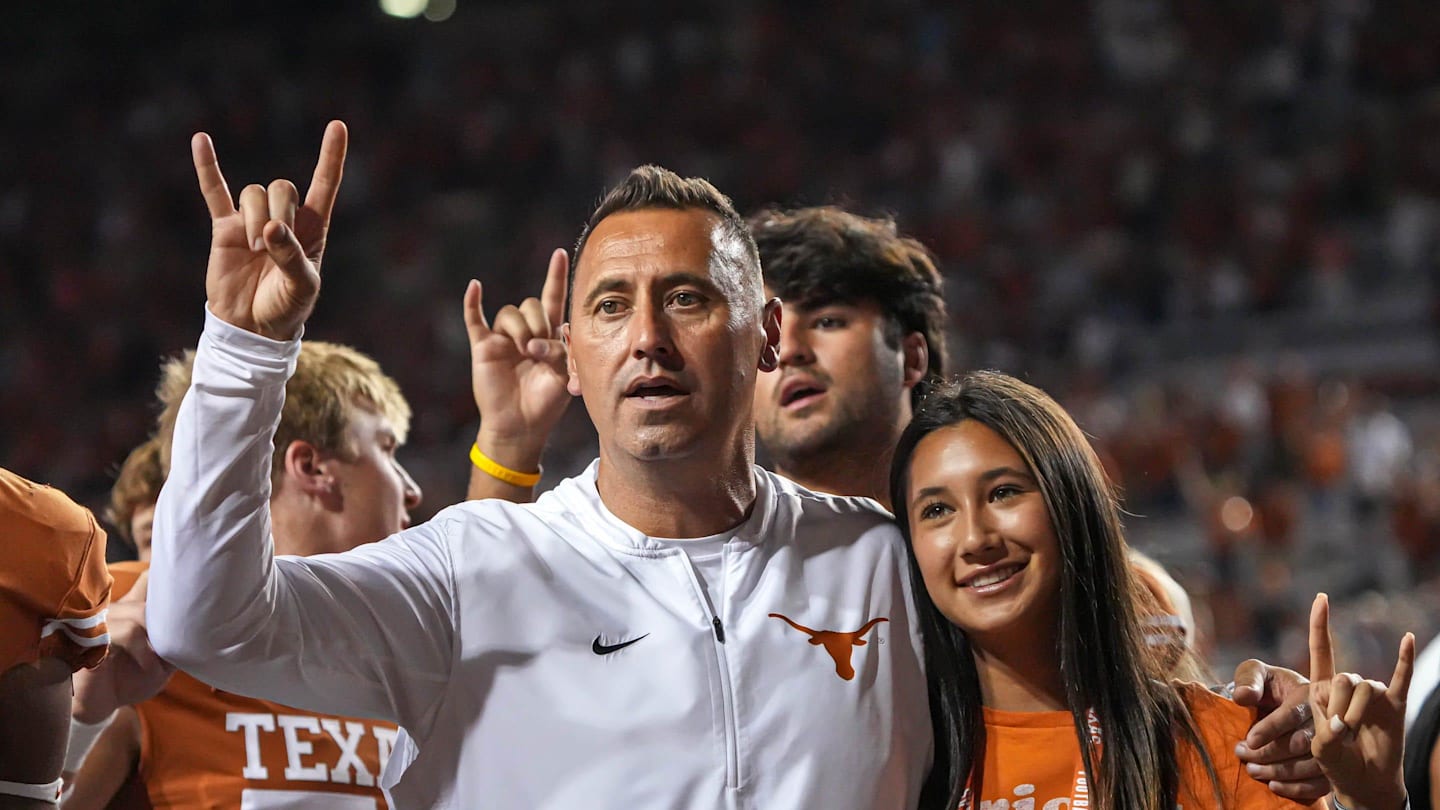
In a wide-ranging interview on Colt McCoy’s Clean Pocket podcast, Texas Longhorns head coach Steve Sarkisian pulled back the curtain on his NIL philosophy. In doing so, he delivered a masterclass on how one of college football’s most powerful programs is navigating the sport’s rapidly evolving financial frontier.
“I think NIL has been good for the University of Texas,” Sarkisian said. “For a long time, NIL may have existed — just not at the University of Texas. When they regulated it… we got a seat at the table to compete at that level for some of the high-level players. It’s been good to us.”
It’s a telling quote. Texas wasn’t built on backroom deals or quiet cash drops. Their rise in the NIL era has been strategic, transparent, and ruthlessly efficient. Texas is thriving with a top-ranked recruiting class, a College Football Playoff appearance, and an NIL war chest few can match — but not by overextending.
Sarkisian made one thing explicitly clear: Texas doesn’t do bidding wars.
“When we think a guy is overpriced, we let him go,” he said. “We look at the value of the player on our roster, where he might sit, we put a number on it, and it is what it is.”
If hat sounds like NFL front-office speak its because it is. Sarkisian’s stint as the Atlanta Falcons offensive coordinator gave him a firm grasp of salary cap logic and roster economics. Now, that mindset is embedded in every aspect of Texas football, from portal evaluations to freshman projections to NIL negotiations.
Texas boasts top-dollar talent. Arch Manning leads the way with an estimated NIL value of $6.5 million per On3 and a national deal with Red Bull. Edge rusher Colin Simmons, the reigning Shaun Alexander National Freshman of the Year, checks in around $1.5 million. But even with big money in play, Sarkisian is clear: culture drives compensation.
“Never sacrifice character for talent,” he told McCoy. “There’s a lot of talented players. But if you believe in culture, you’ve got to make sure you look at the character too.”
This balance of financial might and internal discipline is what separates Texas. While other programs chase headlines and scramble to react, the Longhorns are building with intention. They’ve created infrastructure, set values, and embraced NIL as a competitive advantage.
Few programs will be better prepared when revenue sharing becomes official later this year than Texas. Sarkisian hasn’t just adapted to the sport’s new realities — he’s anticipated them. And in doing so, he’s positioned the Longhorns as the blueprint for what big-time college football looks like when tradition meets the business of winning.