

The Atlantic Coast Conference held its annual winter meetings this week in Charlotte N.C.
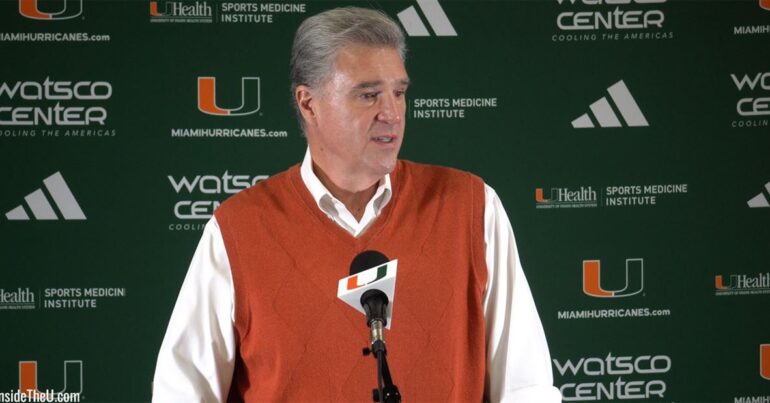
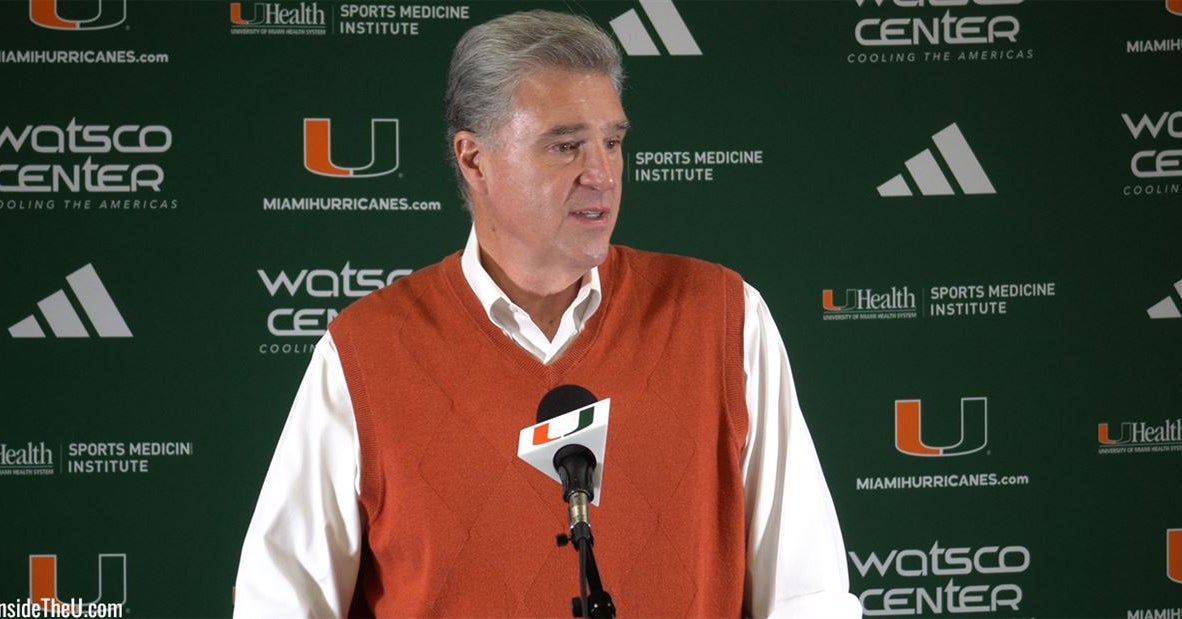
The league’s athletic directors were in attendance to discuss a number of topics and Miami’s Dan Radakovich joined the ACC Network’s Inside ACCess to discuss five topics regarding college athletics and college football.
On the house settlement and what it means in terms of revenue sharing and how much you have to spend and how the job has changed lately because of this…
“Day to day it’s changed how we work. Because we grew up in a very different collegiate athletics business than what we have today. Today, it is more about how are we getting the resources that we need to fund basically a new $20 million expense that we have within our program. Michael (Alford at Florida State) being a public institution, Miami being a private institution, we go about it, I think, in different ways. But at the end of the day, it’s still a resource that needs to come forward from somewhere. And I think that our institutions are both, they both see the great value of intercollegiate athletics to the university brands and certainly our alumni bases and what it means realistically for the state of Florida as well. Because along with another, you know, with University of Florida, I mean, we’re the biggest brands within the state as it relates to college athletics. So protecting that, making sure that we continue to move forward as an athletic program and as a good part of the institution, that takes up a lot of the day.”
On the impact of the $20.5 million in revenue share that is going to go to the student-athletes and what type of impact this is specifically going to have on football in helping compete for national championships…
“Those resources can come forward in various ways, not only just the $20.5 million that you talked about, but with the expanded roster limits, scholarship opportunities for student athletes as well. So again, being a private institution, those are very valuable commodities, the tuition to be able to get young people, especially in the Olympic sports, as Michael talked about, to be able to come and participate at your school. Exactly right, football is the revenue driver to be able to move forward and really kind of give an impetus through the rest of our programs. But that student athlete experience is crucially important to make sure that your programs continue to move forward.”
On fair market value and college football becoming more NFL-like with a general manager role and roster building…
“While the term GM has become kind of a cool thing to have, maybe the same as Michael, we’ve had people within the football program really kind of doing that function without maybe having that title. And I think the same thing with some other sports that we have to make sure that we’re utilizing the dollars that we have in the most effective way possible. But it is, it is, different now to be able to have the focus maybe on that one individual. But you know, at the end of the day, we’re not NFL-like, we don’t draft, we are all competing for a very finite number of resources out there from a collegiate pool of student athletes. So that along with the transfer portal and the ability to for student athletes to move makes it very un-NFL-like. So I think it’s a, it’s a little bit more of a Rubik’s cube for us collegiately than maybe it is for the NFL.”
On the first year of the 12-team college football playoff system…
“I think that, first of all, it was a rousing success from a ratings perspective. It was a great success for student athletes and coaches. It’s collegiate football can do very little wrong when they put their best brands and best teams out there and show them to the country. I think really a minor tweak along the way from how the rankings are put out for everybody to see. Maybe that’s a good thing for the commissioners and Notre Dame to think about. And eventually there’s going to be an expansion of the playoff and how that’s going to look and how those are going to affect each and every conference.”
On conference championship games playing into dynamic of college football playoffs…
“It is just one data point and sometimes when you look at this past year we were trying to mix four team playoff ideals that had gone over the last 10 years into a 12-team playoff and that’s very, very different. So I think there’ll be a lot of positive changes as we continue to move forward.”
Christopher Stock has covered the Miami Hurricanes since 2003 and can be reached by e-mail at stock@insidetheu.com and on Twitter @InsideTheU