

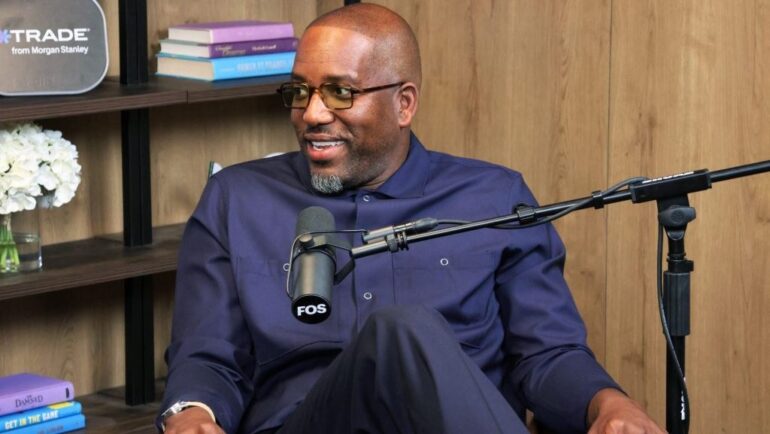
Former NBA All-Star Michael Redd believes the next big wave of sports ownership won’t happen in the NFL. It will happen on college campuses. “There’s only 32 NFL teams, but there’s 300-plus college programs,” Redd said, according to Front Office Sports. “I think you’re gonna see more pursuit toward maybe owning a college football team going forward.”
Redd, the 2008 Olympic gold medalist and former Ohio State star who now works as an investor, made the comments to Front Office Sports editor-in-chief Dan Roberts for an upcoming episode of the outlet’s Portfolio Players series.
Simple math for investors
Redd’s reasoning starts with scarcity. Professional franchises are rare, and their valuations are approaching and in some cases topping $10 billion, Front Office Sports reported. The college sports investment market, by contrast, is still in its early stages. To Redd, that means more opportunities across hundreds of schools and more variety in the kinds of deals that can get done.
“I think you’re gonna see a trend of, ‘I may not be able to buy an NFL team, but I’m gonna get involved with a college program and take ownership of it,'” Redd said. “‘And maybe get involved with some of the TV rights and the merch.'”
So far, outside money in college athletics has mostly come through minority stakes and private credit. Front Office Sports pointed to the Utah athletic department’s deal with Otro Capital and the Big 12’s five-year private capital agreement with RedBird Capital Partners as examples. Because most universities are nonprofits, “ownership” in college sports doesn’t work the same way it does for a pro franchise. Still, Redd sees plenty of room for investors to get involved.
Media rights and a possible “super league”
Redd also expects the biggest paydays in college sports to come from media rights. He said the SEC and Big Ten could break off and form their own “super league.” He believes that would draw interest from traditional TV partners as well as streamers such as Amazon and Netflix.
“There’s a lot of things out there as far as potential from a revenue standpoint that I think college sports has just scratched the surface on,” he said.
“Is it college sports or is it pro sports?”
Redd pointed to name, image and likeness (NIL) deals and the free-agency feel of the transfer portal as signs that the college game has become more professional in recent years. “Is it college sports or is it pro sports?” he said. “That’s the overarching [question].”
He believes the ownership model will start to look more like pro sports as well. He also admitted the landscape is moving fast. “It’s changing every day, and in six months it’s gonna change again,” Redd said. “And next year, it’s gonna look totally different.”
Front Office Sports noted in an editor’s note that RedBird IMI, in which RedBird Capital Partners is a joint venture partner, is the outlet’s primary investor.
Redd’s comments come as college football heads into Rivalry Week, with conference title races and College Football Playoff spots on the line. They add an investor’s voice to a sport where the business side is changing almost as fast as the rosters.