

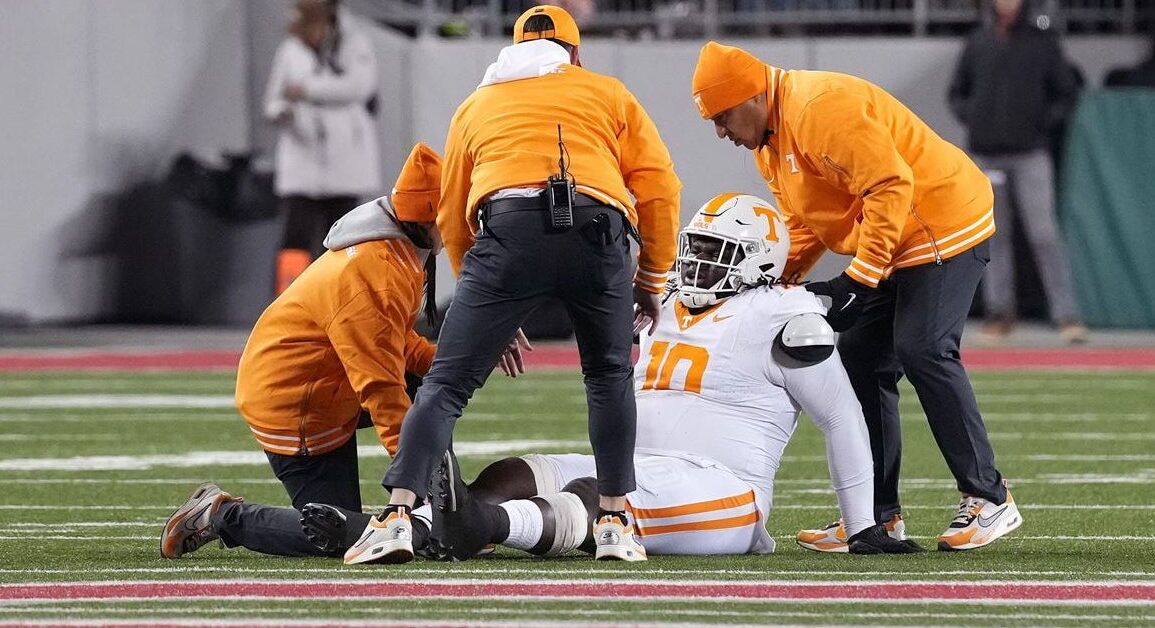
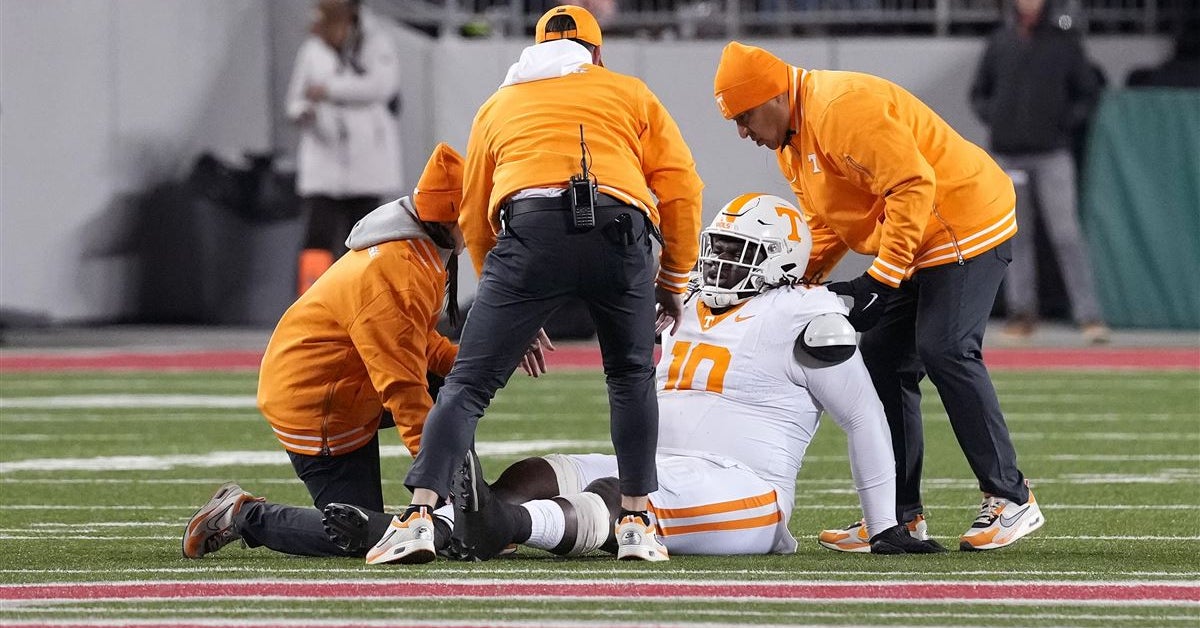
The NCAA Football Rules Committee has proposed changes to the injury timeout rule for the 2025-26 season, aiming to address the rising concern of feigned injuries used to disrupt momentum, the NCAA announced Friday. During meetings in Indianapolis this week, committee members recommended that if medical personnel assess an injured player after the ball is spotted for the next play, the team would be charged a timeout. If the team has no timeouts remaining, a 5-yard delay-of-game penalty will be enforced.
All rule changes must be approved by the NCAA Playing Rules Oversight Panel, which is set to review football proposals on April 16 before becoming official.
“The committee identified the time period after the ball has been spotted as the most egregious violations of the injury timeout rule and is addressing the issue this way,” Georgia head coach and co-chair of the committee Kirby Smart said in a release. “Having a set time frame of when the game is stopped for an injured player should hopefully help curtail the strategy of having players fake injuries.”
The NCAA Football Rules Committee had discussed this issue in recent years. Ahead of the 2021 season, a system was introduced allowing schools or conferences to request a postgame video review led by Steve Shaw, the NCAA secretary-rules editor and national coordinator of officials, to assess questionable injury-related actions. If a player is found to have faked an injury to manipulate the game, the conference of the offending team is notified, and disciplinary measures can be taken by the conference office.
The proposed rule change aims to provide an in-game solution to prevent injury faking, as committee members believe it harms the overall integrity of the game.
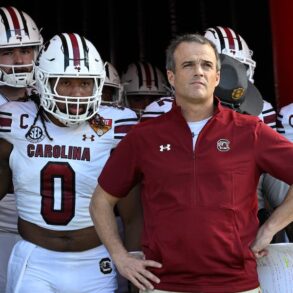
SEC commissioner Greg Sankey sent a memo to SEC athletic directors and coaches last season demanding teams “play football and stop the feigned injury nonsense” after South Carolina coach Shane Beamer complained about Ole Miss participating in the charade following the Gamecocks’ loss to the Rebels back in October.
According to the punishment guidelines in the memo, head coaches face a public reprimand and a $50,000 fine for a first offense, with a second offense resulting in another reprimand and a $100,000 fine. On the third offense, the coach of the team will be suspended for the next game.
The American Football Coaches Association proposed the “injured” player misses the rest of the series if there is a stoppage of play requiring medical attention.
Get the latest football and recruiting scoop on your favorite college team today.
Faking or exaggerating injuries became a growing trend in college football around the 2021 season, especially on defense used to combat tempo-driven offenses. Ahead of the 2022 campaign, the NCAA had previously announced it would not add in-game penalties for players accused of faking injuries, but other post-game penalties could be assessed.
Brad Crawford contributed to this report.