

By Dianna Russini, Mike Jones, Jayna Bardahl and RJ Kraft
NFL owners opted to table the vote on whether to ban the “tush push” — the play made popular by the Philadelphia Eagles — during the annual league meeting on Tuesday in Palm Beach, Fla.
No official vote was cast, but an informal vote revealed the teams were split 16-16 on the matter, according to an individual in the room during deliberations. It would have taken 24 teams to vote in favor of banning the play for the proposal to be adopted.
Advertisement
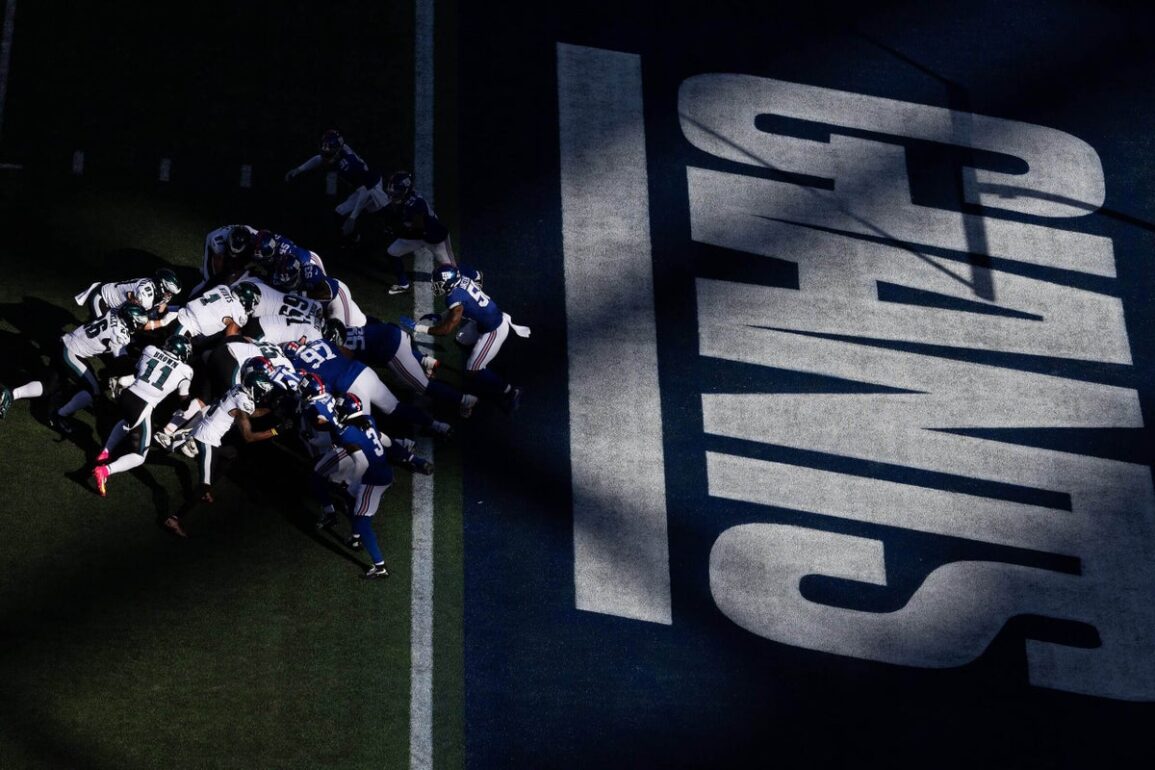
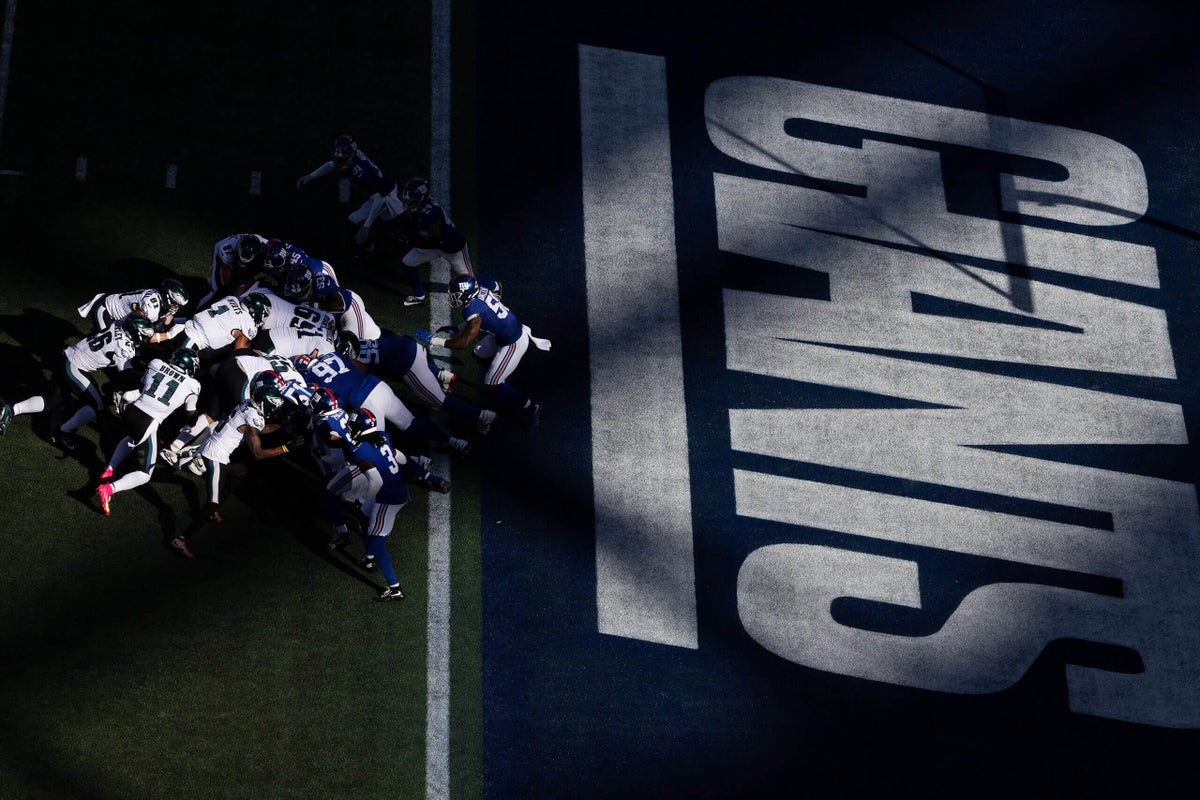
The Green Bay Packers proposed the league ban the “tush push,” a play where the quarterback takes the snap under center and dives forward while teammates push him from behind in a rugby-like scrum. The Packers’ proposal was “to prohibit any offensive player from pushing a teammate who was lined up directly behind the snapper and receives the snap, immediately at the snap.”
The Eagles have run the play, also known as the “Brotherly Shove,” to great success in short-yardage situations under coach Nick Sirianni with quarterback Jalen Hurts. The Buffalo Bills — with reigning MVP quarterback Josh Allen — have also used a variation of the play frequently.
Tuesday’s decision, however, is not a clear victory for teams which utilize the play. The tabling of the vote means the language of the rule concerning the play could potentially be tweaked. So while the play itself might not be banned, it could still look different going forward.
NFL competition committee chair Rich McKay stressed that the league is sensitive to the idea of enacting a rule change that would be directed at one or two teams.
“That’s not why it’s being discussed,” he said during a press conference following the decision to table the debate. Instead, McKay said, discussion centered partly on safety, and partly on the history of the game.
Until 2004, NFL rules prohibited the pushing or pulling of ball carriers, however the rule was removed because of the challenges officials faced in determining whether downfield action on particular plays involved a player being pushed or pulled forward.
That rule removal opened the door for the tush push as we know it. But the play has undergone an evolution ever since the Indianapolis Colts (with Sirianni as offensive coordinator) began running a variation of the play from 2018 to 2020 before Sirianni in 2021 brought it to Philadelphia and made the play most popular.
Advertisement
During this offseason’s deliberations, opponents of the play brought up safety concerns about injury risks a quarterback faces while being pushed from behind. Others raised concerns about potential head and neck injuries linemen face while slamming against one another in the scrums. There are defensive-minded coaches who want more answers on the injury risks that linemen face with this play, one person briefed of the deliberations said.
However, McKay confirmed that there’s little to no injury data that suggests that the play is more dangerous than a traditional quarterback sneak. He also confirmed that much of the disdain some opponents of the rule hold towards the play stems from a football purist mindset.
“There are definitely some people that have health and safety concerns, but there’s just as many people that have football concerns, and that was kind of what went on in the room with the discussion,” McKay explained. “So I wouldn’t say it was because of one particular health and safety video or discussion. It was much more about the play, the aesthetics of the play, ‘Is it part of what football has been traditionally, or is it more of a rugby play?’ All those types of discussions.”
The discussion on whether or not to ban the play was a huge talker among coaches and executives at the annual league meeting. Packers general manager Brian Gutekunst did not draft the proposal that his team submitted, but he fully supported it.
“I think certainly the medical professionals at the league have high concerns about putting players in positions that could lead to catastrophic injuries,” Gutekunst said. “I think this is something that needs to be discussed and we need to be proactive with it rather than be reactive on that.
“I think we owe it to our players. It’s not about success. It’s about safety here.”
Advertisement
Bills coach Sean McDermott believes that his team and the Eagles can be just as good in a more traditional quarterback sneak.
“My biggest concern is the health and safety of the players, first and foremost. It’s added force and then the posture of the players being asked to execute that type of play. That’s where my concern comes in,” said McDermott, who is part of the NFL’s competition committee, which reviews rule proposals and presents supporting statistics to the voters.
“That’s not a healthy posture, to me. Then, when you add force to that posture, that’s concerning for me as to the health and safety of the players. … To me, (the Green Bay proposal) takes away the force. Traditional quarterback sneaks have been around for a long time. That’s the context of it that’s important. Then the pushing adds the force piece, and it exponentially raises my concern.”
Others, like Cleveland Browns coach Kevin Stefanski and Indianapolis coach Shane Steichen, saw no reason to change the rules.
Stefanski said “the injury data’s not there. So I would be in favor of keeping the rules as they are.”
“I’m not in favor of taking it out. I think it’s good for the game,” said Steichen, who was Philadelphia’s offensive coordinator under Sirianni from 2021-22. “What (the Eagles) do, they do it better than anyone. Other teams are doing it. Buffalo’s doing it. I think it’s been around for a long time, to be completely honest, because when you’re on the half-yard line and backed up, you gotta run a QB sneak. People (are) usually back there pushing. They just brought (the tush push) to the field of play a couple of years ago. I’m in favor of keeping it.”
Several rule proposals were passed on Tuesday. Both teams are able to possess the ball in overtime during the regular season (regardless of the outcome of the first overtime possession) with the overtime period remaining 10 minutes. Additionally, the league approved the use of expanded replay assist “to advise on-field officials on specific, objective aspects of a play and/or to address game administration issues when clear and obvious video evidence is present.” The dynamic kickoff is now permanent and touchbacks on kickoffs will bring the ball out to the 35-yard line.
(Photo: Al Bello / Getty Images)